

How to Build an Automation Strategy That Actually Works in Manufacturing

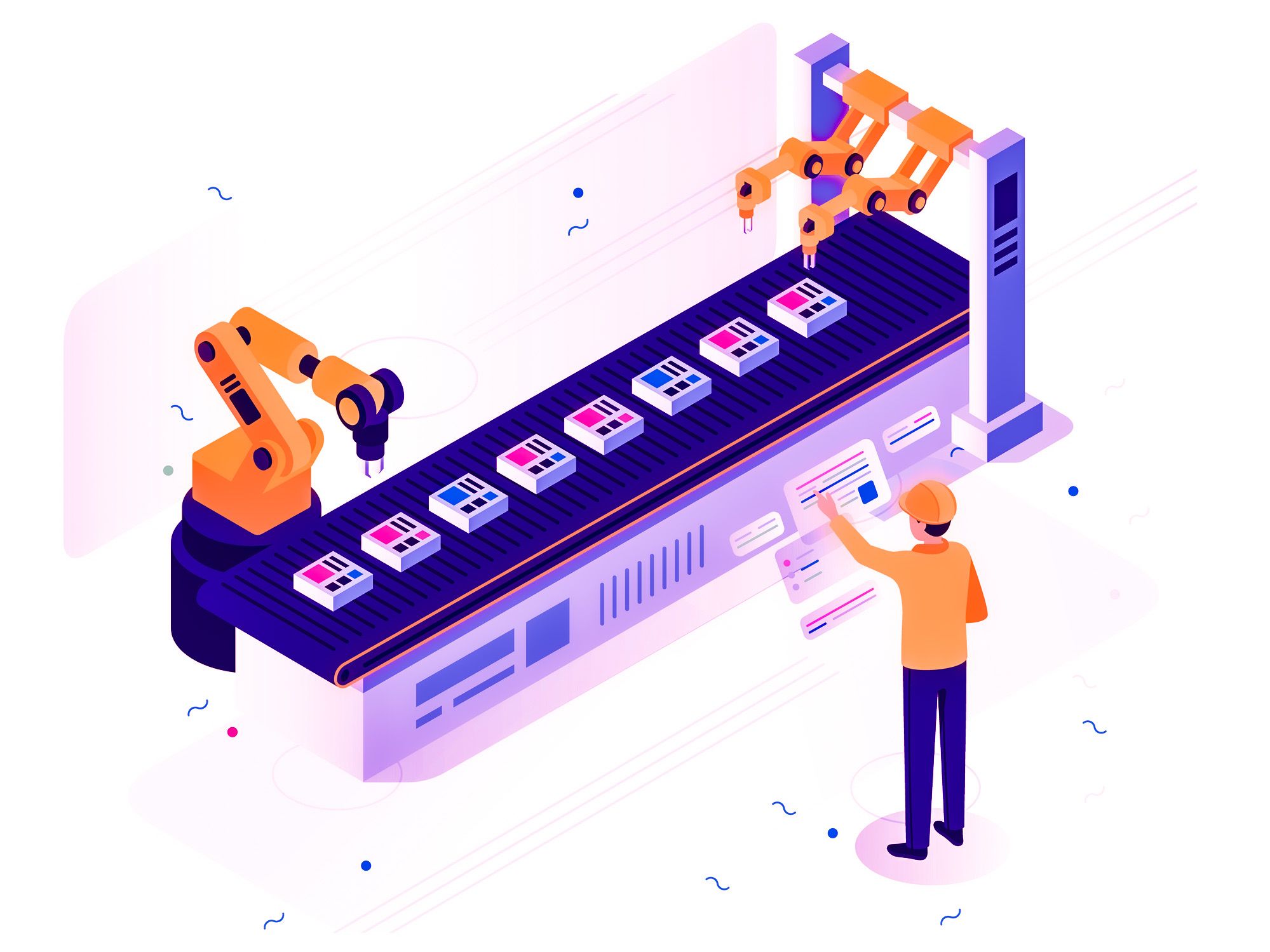
Quick answer: An effective automation strategy in manufacturing starts with clearly identifying a specific operational problem (production bottleneck, labor shortage, quality issue) rather than beginning with a particular technology. From there, manufacturers should focus on small pilot projects that allow teams to test solutions, learn from real conditions, and build internal momentum. Technologies like cobots and AI can deliver value, especially in repetitive tasks and data-driven decision-making, but success depends on aligning them with defined goals. Over time, strong results come from stable processes, trained teams, continuous improvement, and a clear focus on measurable business impact, including efficiency, reliability, and return on investment.
Manufacturers are always under pressure to do better, stay competitive, and use technology more effectively. That particular conversation often revolves around automation, but the way forward is far from being clear. It includes making choices about systems, people, and long-term goals, all of which are influenced by what is happening on the shop floor.
One thing stays the same across all areas and fields. Manufacturers are practical, resourceful, and always looking for ways to make things better. They want to find ways to use new technologies without slowing down, and to make their workforce stronger while meeting changing needs.
That larger effort includes the automation strategy. It is not a separate project. It has to do with performance, workforce development, and the ongoing work of making operations stronger and more capable.
This article talks about how manufacturers can use automation in a clear and purposeful way, based on real-world experience rather than abstract ideas.
Where Automation Is Delivering Real Value Today
When manufacturers talk about automation, they usually mean big systems or long-term investments. In real life, the most meaningful progress usually comes from targeted, practical applications that deal with current problems.
Right now, two areas stand out.
Collaborative robots, or cobots, are becoming more popular because they help solve a problem that almost every manufacturer is having: not enough workers. These systems step in when consistency and repetition are most important, especially in places where it's hard to find skilled workers.
Cobots can be added without having to change the whole production line. They work with teams that are already in place and do certain tasks that would otherwise slow down production or cause bottlenecks. For a lot of manufacturers, that's enough of a reason to spend the money.
At the same time, AI is starting to make its way into factories. There is a lot of interest, but the adoption curve is still not smooth.
AI is most useful right now in how manufacturers deal with data. Production environments always have a lot of information coming in, but a lot of it isn't used. AI can help you make better decisions by processing that data faster, finding patterns, and so on. One of the most obvious examples is predictive maintenance. Teams can now plan for equipment failures instead of just reacting to them. That cuts down on downtime and makes everything more reliable.
AI is also starting to have an effect on quality control. More consistent analysis can improve inspection processes, which will help teams find problems sooner and keep standards higher.
Even though these are good things, people often hesitate. A lot of companies are still trying to figure out how AI fits into their business. Most of the time, the uncertainty comes from not knowing enough about something, not from it not being valuable.
Why Perspective Matters More Than Strategy Documents
Automation grows through talking to people, sharing experiences, and seeing how other people are solving the same problems.
One of the most common things about manufacturing environments is that people think that problems are unique. A business might think that its problems with production delays, quality, or staffing are only happening in its own operations but that assumption almost never holds up.
The same questions come up over and over again in different places and industries. How can we make more without lowering quality? How can we make systems that were never meant to work together more reliable? How do we speed things up without putting too much stress on the workers?
These are problems that everyone faces, and knowing that changes how leaders look for solutions.
When manufacturers engage with peers, they see how other people are using automation in real life, what worked, and what didn't. That point of view often leads to better decisions than any planning meeting could come up with on its own.
There is also a practical reason to break out of your usual routines. Focus is needed for day-to-day operations, and that focus can make it hard to see problems in a new light. New information can change the way you think. It questions what we think we know and makes room for new ideas that might not come up otherwise.
An automation strategy is about being able to see the problem clearly. And that clarity often comes from talking to other people who are going through the same things.
Start Small and Build Momentum
It's better to focus on one clear problem instead of trying to solve many at once. A bottleneck in production is often a good choice. If one process is always slowing down production, even a small improvement can make a big difference in delivery times and overall efficiency.
Small pilot projects give you a good place to start. They let teams try out ideas, learn from how they work, and gain confidence without putting themselves in danger. They start to build momentum as the early efforts start to pay off.
That speed is important.
It helps the team trust each other and makes it easier to support future projects. Over time, what starts out as a specific improvement can grow into a larger, more unified plan for automation. The progress is steady, and the group gets better at what it does as it goes along.
Start With the Problem, Not the Technology
One of the fastest ways to derail an automation initiative is to begin with the tool instead of the problem.
It is common to see manufacturers approach automation with a specific solution already in mind. A team hears about a successful cobot implementation elsewhere and assumes the same approach will work in their own environment. What often gets missed is the context behind that decision.
Effective automation starts with clarity.
The first question should be simple. What problem are we trying to solve? In some cases, the answer is a labor shortage. In others, it may be safety concerns, inconsistent quality, or the need to increase throughput. Each of these requires a different approach, even if the underlying technology looks similar.
When that clarity is missing, the results tend to disappoint. The technology itself may function as expected, but it does not deliver meaningful impact because it was never aligned with a defined goal.
A focused starting point changes that. It creates a clear benchmark for success and helps guide decisions throughout the process. It also prevents unnecessary complexity. Not every challenge requires an advanced solution, and not every operation benefits from the same type of automation. Taking the time to define the problem is what makes the investment worthwhile.
What Successful Adoption Looks Like Over Time
Implementation is just the start. The real test of success comes months later, when the system is used every day.
There are many ways to get there. Some companies build their own skills and take charge of automation projects from the start. Some people use outside partners or integrators to come up with and put into action solutions. Both methods can work if there is a plan to keep the system running after it goes live.
What happens next will determine if you can keep your success going.
Training is still important after the initial rollout. Teams should know not only how to use the system, but also how to keep it running, fix problems, and change it when things change. Putting all your trust in one trained person is risky. Stability comes from getting to know each other better as a team.
There will be problems that come up that you didn't expect. A system may add new requirements that weren't fully expected, like changes to fixtures, changes to the way work is done, or more coordination between roles. What matters is how those problems are dealt with.
Communication between management and the shop floor is very important. Problems need to be brought up early, talked about openly, and solved with the help of the people who work closest to the system. That feedback loop makes sure that small problems don't turn into big ones.
Automation is useful when it can be used for a long time. That needs to be looked at after it's been put into place, not just during it. The system goes from being a new addition to a reliable part of the operation as teams stay involved, keep improving the process, and gain confidence over time.
From Automation Hype to Real Return on Investment
People often talk about automation with a lot of excitement. It's easy to focus on what's possible because of new tools, new abilities, and constant innovation. But what matters to manufacturers is much more down-to-earth. Does it give you something you can measure?
Before choosing any technology, you need to be disciplined.
The first step is to look at how much money you will get back. That means looking at the specific area you want to target and figuring out what kind of effect automation can really have. It's not just about saving money directly. It also means more throughput, less downtime, and the ability to move workers to more valuable tasks.
Opportunity cost is something that people often forget about. Every choice has a cost. When a company picks one path, it doesn't look into the other. This is especially important when it comes to automation.
Not doing anything has a cost.
Not automating right away doesn't just keep things the same. It can slow growth, put a lot of stress on current teams, and make it harder to meet customer needs. It could even make competition more dangerous over time. When operations can't grow or change because of a lack of workers or inefficiencies, the business starts to feel that pressure in very real ways.
These are the things that help you make clear decisions about automation. The goal is not to adopt technology for its own sake, but to make sure that any investment directly improves business performance.
Strengthen the Foundation Before Scaling Automation
Automation works best when things are stable. When the processes that are already in place aren't working right, adding technology usually makes things worse instead of better. That's why it's so important to get ready.
Operations are where stability begins. Scheduling needs to be dependable enough to keep production going. To make automation work well, equipment needs to work in a way that is predictable. Even well-designed systems can have trouble getting the results they want without that base.
The growth of the workforce is just as important.
Technology does not work on its own. The people who run, keep up with, and use it every day are what makes it work. Automation works much better when teams are trained, supported, and given the chance to learn new skills.
This includes giving employees new tools, teaching them new things all the time, and making a clear effort to help them grow as the systems are put in place. People are more likely to use technology successfully when they feel ready.
People often ask manufacturers to do more with less. That reality makes these basics even more important. When there are strong processes and skilled teams, automation can do more than just make things better at first.
Automation works best when it is seen as part of a larger effort to improve operations. It works with stable processes and skilled people, making both stronger instead of trying to replace them.
How Solwey Can Help
Building tech products isn’t easy. But it is doable especially if you approach it with clarity, focus, and the right mindset.
If you’re unsure where to start, we at Solwey can help you formulate a plan. Just tell us about your challenges and what’s holding you back. We can guide you through finding a solution, whether that means optimizing existing tools or building something new.
Our personalized service involves working closely with you to understand your particular challenges and developing solutions that are suited to your specific requirements, rather than the other way around.
With a strong background in custom software development, we bring industry expertise to every project, delivering software that not only works, but works for you. Whether you work in finance, healthcare, retail, or manufacturing, our industry-specific solutions are tailored to the specifics of your field.
You don't have to sacrifice price to get exceptional service. Our competitive pricing structure ensures that you receive high-quality custom software without breaking the bank. With our agile processes, we can deliver results faster, allowing you to respond quickly to market demands or operational changes.
We place a high value on dependability and customer support. We will be there for you from start to finish, and beyond. Our team is committed to providing seamless support, ensuring that your software runs smoothly and your business runs more efficiently.
Allow us to be your trusted partner in driving your digital transformation. Choose Solwey for quick, adaptable, and dependable software solutions that will keep you ahead of the competition.
Frequently Asked Questions About Automation Strategy in Manufacturing
What is the main goal of an automation strategy in manufacturing?
The main goal is to improve operational performance by addressing specific challenges such as inefficiencies, labor shortages, or quality issues, while ensuring long-term sustainability and measurable business impact.
Why do manufacturers struggle to adopt automation?
Many manufacturers face uncertainty about how automation, especially AI, fits into their operations. This hesitation often comes from a lack of clarity or experience rather than a lack of value in the technology itself.
Where is automation delivering the most value today?
Automation is currently delivering strong results in:
- Repetitive and consistency-driven tasks through collaborative robots
- Data-driven decision-making through AI
- Predictive maintenance to reduce downtime
- Quality control through more consistent inspection processes
YOU MAY ALSO LIKE
View all


Never miss anything!
Get weekly updates on the latest automation trends and design news.
Let's get started
If you have a vision for growing your business, we're here to help bring it to life. From concept to launch, our award-winning team is dedicated to helping you reach your goals. Let's talk.