

How Spec-Driven Development Turns AI Into a Reliable Execution Layer
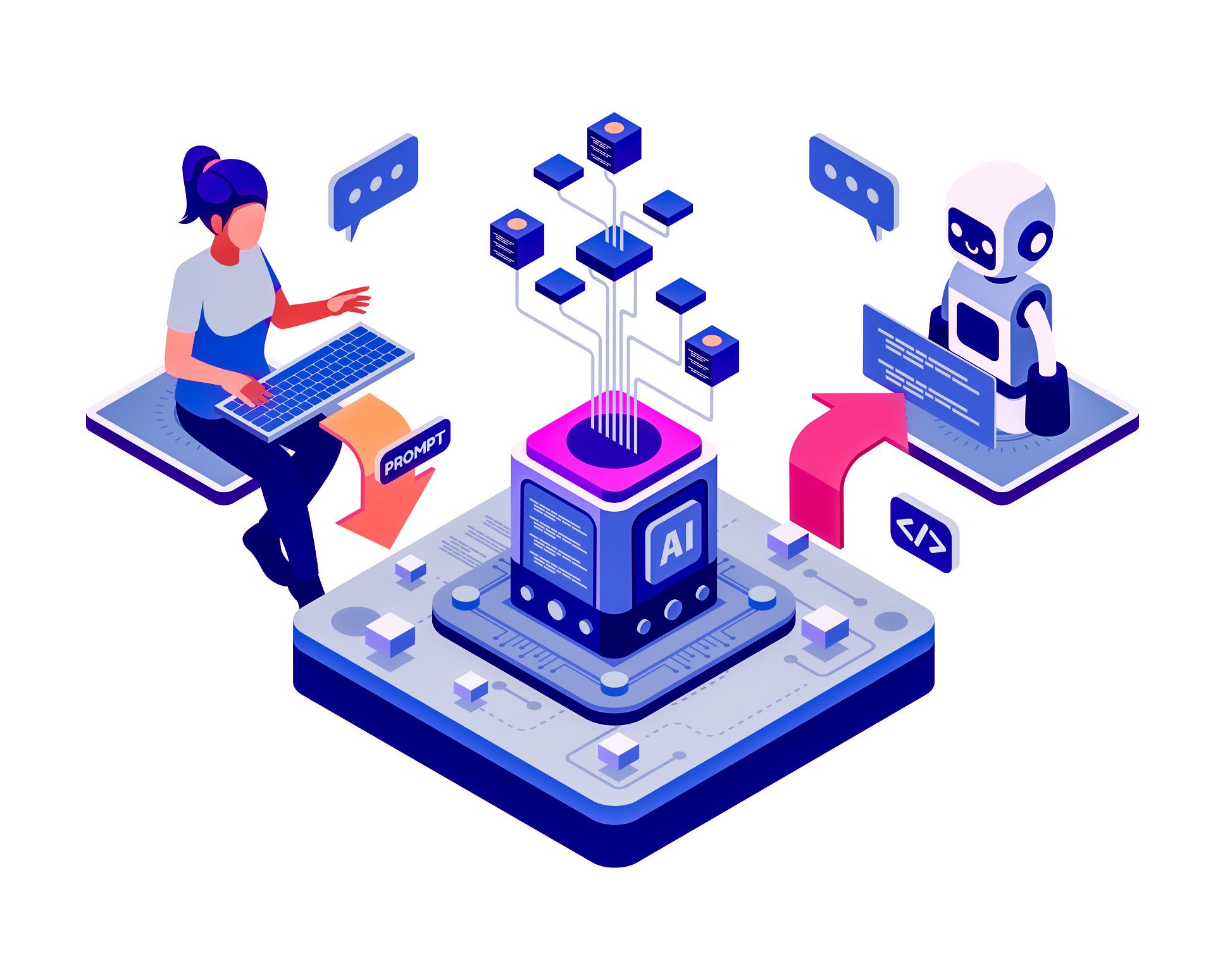
Quick answer: Spec-driven development is a structured approach to AI-assisted software development where developers define detailed specifications before generating code. Instead of relying on prompts, teams outline requirements, architecture, and edge cases upfront, then use AI to execute. This reduces errors, improves reliability, and keeps developers in control of the system. This approach works for internal tools, product features, and larger systems alike. It provides a way to use AI without giving up control, while maintaining a level of clarity that traditional workflows often struggle to achieve.
AI-powered coding tools have been marketed as a clear path to faster development, but often generated code lacks depth, edge cases are missing, and developers find themselves stuck in long debugging cycles. Over time, engineers begin to lose a clear understanding of the systems they are responsible for.
The issue is how you use AI.
Most teams rely on prompt-based workflows, where developers ask AI to generate code directly. This approach brings quick outputs, but it rarely produces systems that are reliable, maintainable, or easy to reason about. The result is a growing gap between speed and quality.
A More Structured Approach to AI-Assisted Development
Spec-driven development is a more organized way to work with AI. It replaces random prompting with planned thinking.
Developers start by writing detailed specifications instead of asking an AI tool to write code. These specifications spell out what the system should do, how it should act in different situations, and how it should be checked. They include requirements, edge cases, architectural choices, dependencies, and rules for checking.
This process helps make things clear before any code is written. It makes teams really think about the problem instead of just guessing their way through it.
What Spec-Driven Development Looks Like in Practice
The workflow is easy to follow: making the specification, refining it, executing it out, and verifying it. The steps build on each other, making a loop that gets better over time.
Making the Specification
Developers work with an AI agent to fully describe the feature or system, including its functional requirements, edge cases, architectural choices, and dependencies. You can interact with this part. The AI gives examples and shows how they could be useful. When developers need to, they look over these outputs and make changes. The developer is still in charge. The AI is helpful, but it doesn't make choices.
Refining Until It Holds
Refinement leads to quality. Developers read the document, look for gaps, and make the definitions clearer. The main difference between this workflow and the old one is where developers spend their time and energy: they improve instructions instead of rewriting code. There are fewer fixes lower down because improvements happen higher up.
Execution Without Micromanagement
Once the specification is ready, AI agents generate the corresponding implementation. The developer no longer guides line-by-line decisions. The groundwork has already been laid.
Verification
Verification ensures the generated code matches the spec. When issues appear, the correction happens at the specification level. The spec is updated, and the system is regenerated or adjusted accordingly.
Specifications reflect their environment. Backend systems may emphasize data models and integration points. Frontend specs often include layout structures and interaction flows.
Building Effective Specs with AI Tools
A simple but important rule: don't let the agent start writing code right away. At this point, the goal is to define the problem, not solve it in a hurry.
Once that line is drawn, a short description of the feature is usually all you need to get started. The agent can see the codebase, existing patterns, and past specifications. The AI isn't making a guess. It is interpreting the request based on how the system is already set up. A short prompt can lead to a long first draft.
Developers look over the output, paying close attention to things that don't match up, things that are missing, and things that are based on wrong assumptions. Feedback is clear and to the point. With each iteration, the specification gets better.
Before it is run, the specification goes through a separate step to make sure it is correct. The developer starts the interaction over and asks the AI to look over the spec as if it were in charge of putting it into action. The agent finds gaps, things that aren't clear, and dependencies that aren't there. Answering these questions makes things a lot clearer. Every answer goes back into the specification.
The agent then refines the specification again after the questions have been answered. The system only moves on after this loop is finished. Instead of waiting until problems come up during implementation to deal with them, teams deal with them ahead of time, when they are easier and cheaper to fix.
A Practical Walkthrough: From Idea to Working Product
Following a full build from beginning to end is a good way to see how spec-driven development works in real life.
The application is for keeping track of books. People keep track of what they read, find new books, and organize their collections. This app needs a good search function. No matter how well the rest of the experience is, the product fails if users can't reliably find books.
The whole feature was worked on through specifications instead of going straight to implementation.
Step 1: Defining the System Before Writing Code
The process started with a general overview of the application.
Instead of telling an AI to "build a search feature," the system was set up ahead of time. The goal was clear: make a tool that looks at and compares search results from different queries and implementations.
This high-level specification outlined:
- The core features of the application
- The structure of the system
- The way search results would be evaluated and compared
At this point, nothing had been built. The main goal was still to be clear.
After the main structure was set, the system was split up into smaller parts. The project was too big to do all at once, so it was broken up into smaller parts. Each stage was a specific piece of functionality.
Step 2: Expanding Each Stage Into a Detailed Spec
Each stage became its own specification.
For every phase, the process reset. A new spec was created, fully describing that part of the system before any execution began. These specifications were not lightweight documents. They included:
- File structures and component organization
- Data flow and backend interactions
- UI layout and interaction patterns
- Edge cases and expected behaviors
Even design elements were defined early. The AI generated rough layout representations that made the interface visible before implementation. Navigation, sections, and hierarchy were already clear.
This changed the nature of decision-making. Adjustments happened at the design level, not after code had been written.
Step 3: Turning Specs Into Actionable Work
There was a structured implementation plan for each specification.
The plan didn't give vague directions; instead, it broke the work down into clear steps. It looked like a list of engineering tasks:
- Build query input and handling
- Implement result comparison logic
- Render leaderboard views
- Add filtering and selection controls
You could keep track of each step and start over. If execution stopped in the middle, it could pick up where it left off without losing direction.
This got rid of a common source of conflict. There was no need to change the plan during implementation because the plan was already made.
Step 4: Executing Without Guesswork
It was easy to carry out the plan once the specification was detailed enough.
The AI agent put the feature into action based on the structure that was given. Because the architecture, components, and behaviors were already set, the output was very close to what was expected.
At this point, the developer was no longer guiding every decision. The work had already been done at the specification level.
This made it possible for several stages to move forward at the same time. While one feature was being worked on, the next specification could be improved.
Step 5: The Outcome
The result was a fully functional web application designed to evaluate search performance.
It included:
- A dashboard tracking query coverage and progress
- A leaderboard ranking search quality across different inputs
- Detailed views comparing expected and actual results
- The ability to inspect individual queries and their outcomes
- Flexible input methods, including manual entry and JSON import
From a technical perspective, the system used a React frontend and a Node.js backend connected to a local MongoDB database. Besides the stack the notable detail is the timeline. The entire application was built in a single day.
Why This Worked
The speed was not the result of faster coding. It came from removing uncertainty.
Every major decision had already been made before execution began. The structure, logic, and design were defined in advance. The AI agent followed a clear path instead of improvising.
There was no need to constantly correct direction during development. Problems were addressed earlier, when they were easier to fix.
The Advantages of Spec-Driven Development
Spec-driven development gives a process that often seems random, some structure. Once teams stop using ad hoc prompts and start working with clear specifications, the benefits become clear.
Complete Control Over Architecture
Control is one of the first benefits.
When developers depend on direct prompts, the results may not always be the same. The code that is generated might work, but it often shows what the AI thought instead of what the team wanted. This causes unexpected changes in the structure, design, and implementation.
A clear specification gets rid of that uncertainty. Before writing any code, developers can see the whole system. It's all planned out ahead of time, including the architecture, test cases, dependencies, and edge cases.
This level of visibility makes people responsible. The quality of the specification shows in the final output. If something doesn't work, you can find out what went wrong and fix it at the source.
Catching Problems Before They Turn Into Code
Early visibility also changes how problems are dealt with.
When you use a prompt-driven workflow, problems usually show up after the code has already been written. Fixing them often means going through layers of implementation, which makes things more complicated and slows down development.
Problems show up much sooner when you start with the specification. Before execution starts, developers check the logic, find any gaps, and fix any inconsistencies. Edge cases should not be an afterthought. They are part of the process of designing.
This cuts down on the need for reactive debugging and makes systems cleaner and more reliable.
Using Human Knowledge Where It Counts
AI can look at a codebase, but it doesn't know where it came from.
Developers know why certain choices were made, what limitations shaped the system, and where problems came up in the past. It's hard to figure out this context just from the code.
That knowledge is at the heart of the process in spec-driven development. Developers use what they know about the domain and the product to help write the specification. When the AI makes wrong assumptions or misses important information, these problems are found right away.
This partnership makes the most of what each side does best. The AI does the work on a large scale, while people give it direction and make decisions.
Keeping Knowledge Alive Over Time
Documentation is another long-term benefit.
The codebase and specifications are kept together, which makes a record of how and why features were built. This is a good place to start for future work.
When developers come back to a project after a few months, they don't have to piece together decisions from code that is all over the place. The specification makes it clear what the goal is, what design choices were made, and what edge cases were thought about.
This makes it easier for teams to work together and makes it easier to learn new features or go back to old ones.
A More Reliable Process for Development
When you add them all up, these benefits make it easier to build software in a stable way.
Developers are still in charge of how the system looks. Problems are dealt with right away, when they are easier to fix. Knowledge is kept and stored, not lost over time.
AI stops being an unpredictable generator and starts being a reliable execution layer. Not only does this speed up development, but it also makes code that teams can trust and understand.
How Solwey Can Help
Building tech products isn’t easy. But it is doable especially if you approach it with clarity, focus, and the right mindset.
If you’re unsure where to start, we at Solwey can help you formulate a plan. Just tell us about your challenges and what’s holding you back. We can guide you through finding a solution, whether that means optimizing existing tools or building something new.
Our personalized service involves working closely with you to understand your particular challenges and developing solutions that are suited to your specific requirements, rather than the other way around.
With a strong background in custom software development, we bring industry expertise to every project, delivering software that not only works, but works for you. Whether you work in finance, healthcare, retail, or manufacturing, our industry-specific solutions are tailored to the specifics of your field.
You don't have to sacrifice price to get exceptional service. Our competitive pricing structure ensures that you receive high-quality custom software without breaking the bank. With our agile processes, we can deliver results faster, allowing you to respond quickly to market demands or operational changes.
We place a high value on dependability and customer support. We will be there for you from start to finish, and beyond. Our team is committed to providing seamless support, ensuring that your software runs smoothly and your business runs more efficiently.
Allow us to be your trusted partner in driving your digital transformation. Choose Solwey for quick, adaptable, and dependable software solutions that will keep you ahead of the competition.
Frequently Asked Questions
How is spec-driven development different from prompt-based coding?
Prompt-based coding relies on asking AI to generate code directly, often leading to inconsistent results. Spec-driven development focuses on planning first, which produces more reliable, maintainable, and predictable systems.
Why is spec-driven development important for AI-assisted coding?
It reduces guesswork by shifting effort to design and planning. This helps catch issues early, improves code quality, and ensures that AI-generated output aligns with the intended system.
Can spec-driven development be used for small projects?
Yes, it works for both small and large projects. Even for simple features or internal tools, defining clear specifications improves clarity and reduces debugging time.
YOU MAY ALSO LIKE
View all-3.jpg%3Fprefix%3Dmedia%262026-10-19T16%253A46%253A45.981Z&w=3840&q=100)


Never miss anything!
Get weekly updates on the latest automation trends and design news.
Let's get started
If you have a vision for growing your business, we're here to help bring it to life. From concept to launch, our award-winning team is dedicated to helping you reach your goals. Let's talk.